
About All Tours Plane Flightseeing ToursFrom Anchorage ToursRailroad ToursFrom Talkeetna ToursATV ToursFrom Fairbanks ToursNature & Wildlife ToursHiking ToursSherp Fat Truck ToursZipline ToursRafting Tours Directions Hours & Fees
Find Tours 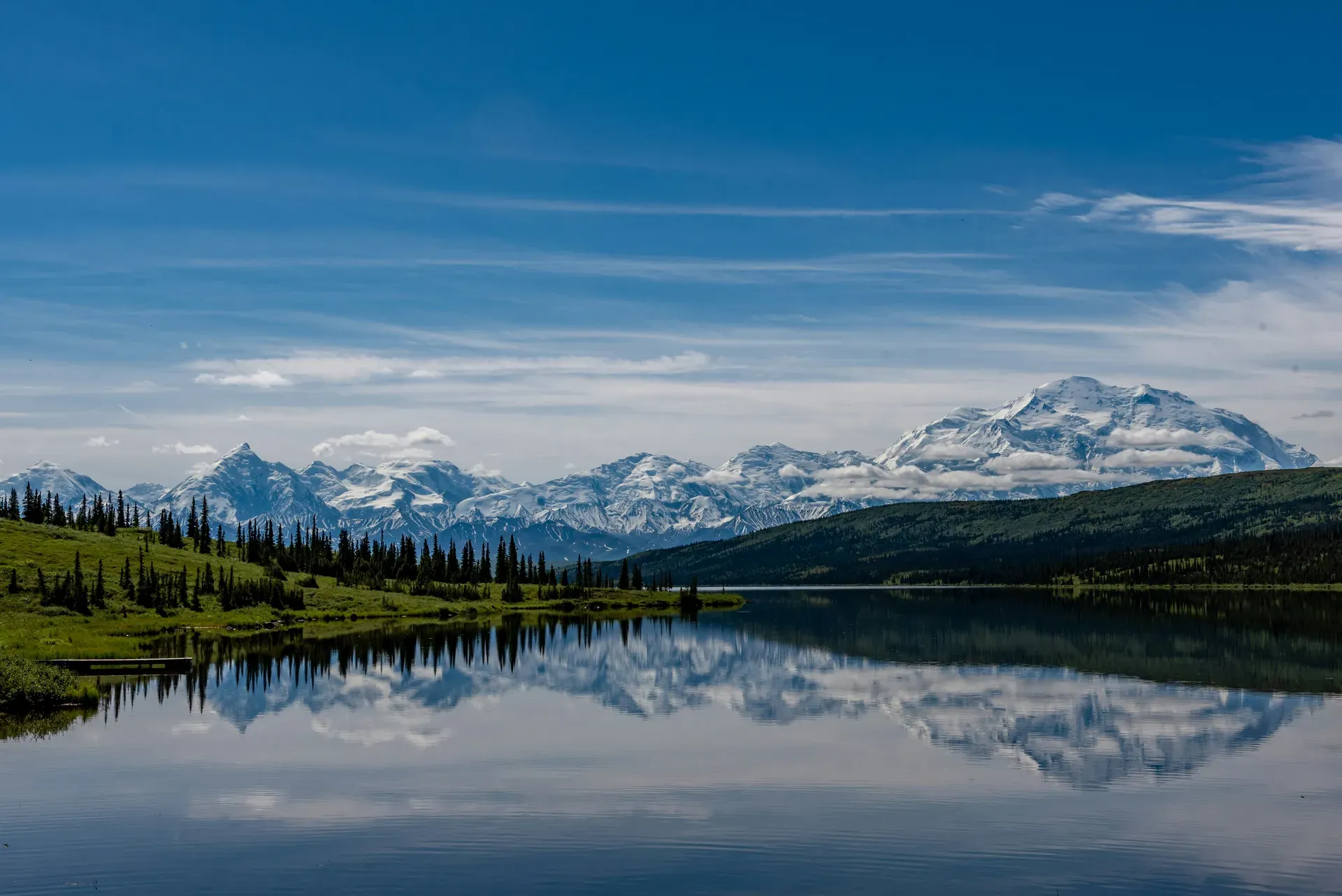
Denali National Park and Preserve covers 6 million acres of sub-arctic wilderness in the Alaskan interior, bisected by a single 92-mile gravel road. North America's tallest peak dominates the landscape, rising 20,310 feet above sea level through taiga forests, alpine tundra, and massive glacial ice fields.
Six million acres of raw sub-arctic wilderness define Denali National Park and Preserve. A single 92-mile ribbon of crushed gravel cuts through the Alaskan interior, providing the only ground access into a landscape dominated by North America's tallest peak. The mountain rises 20,310 feet above sea level, creating its own localized weather systems and casting massive shadows over a vast ecological transition zone. Low-elevation taiga forests of black spruce and trembling aspen give way to treeless alpine tundra at around 2,500 feet. This high-altitude brush eventually yields to barren rock, permanent snowfields, and deep glacial ice.
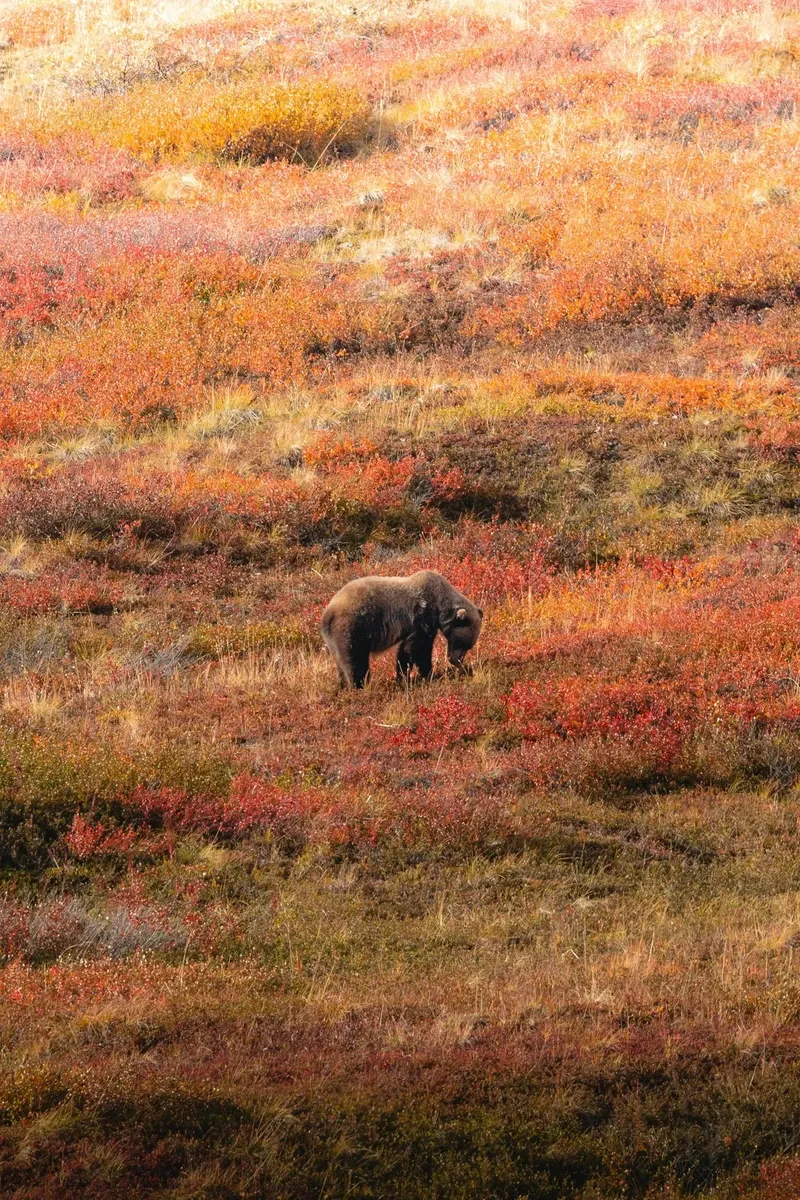
The park road begins in dense boreal forest near the Nenana River, where moose browse on willow branches. By Mile 15, the trees thin out into the Savage River canyon, marking the end of private vehicle access. Beyond this point, the landscape opens into vast expanses of tundra like Polychrome Pass, where volcanic rocks paint the hillsides in bands of yellow, brown, and rust. At Mile 62, Stony Hill Overlook offers the first full, unobstructed view of the mountain from base to summit. Visitors experience a harsh, untamed environment where human infrastructure ends quickly. Transit buses navigate the winding road past Mile 15, dropping hikers off directly into the pathless backcountry. You step off the bus into dense willow thickets or open, spongy tundra, navigating entirely by map and compass. No marked trails exist past the Savage River. Wildlife dictates the rules here. Grizzly bears forage for soapberries on the hillsides, bull moose wade through shallow ponds, and packs of wolves track caribou across the broad river valleys.
Summer brings 24 hours of daylight and thick swarms of mosquitoes, while winter plunges the park into sub-zero darkness with only three miles of plowed road. Clouds obscure the main peak 70 percent of the time during the summer months, meaning most visitors leave without seeing the summit. Travelers planning a trip should book transit bus tickets at reservedenali.com months in advance, as seats sell out long before the May opening. Check the official NPS website the morning of your trip, as heavy rain frequently washes out sections of the park road.
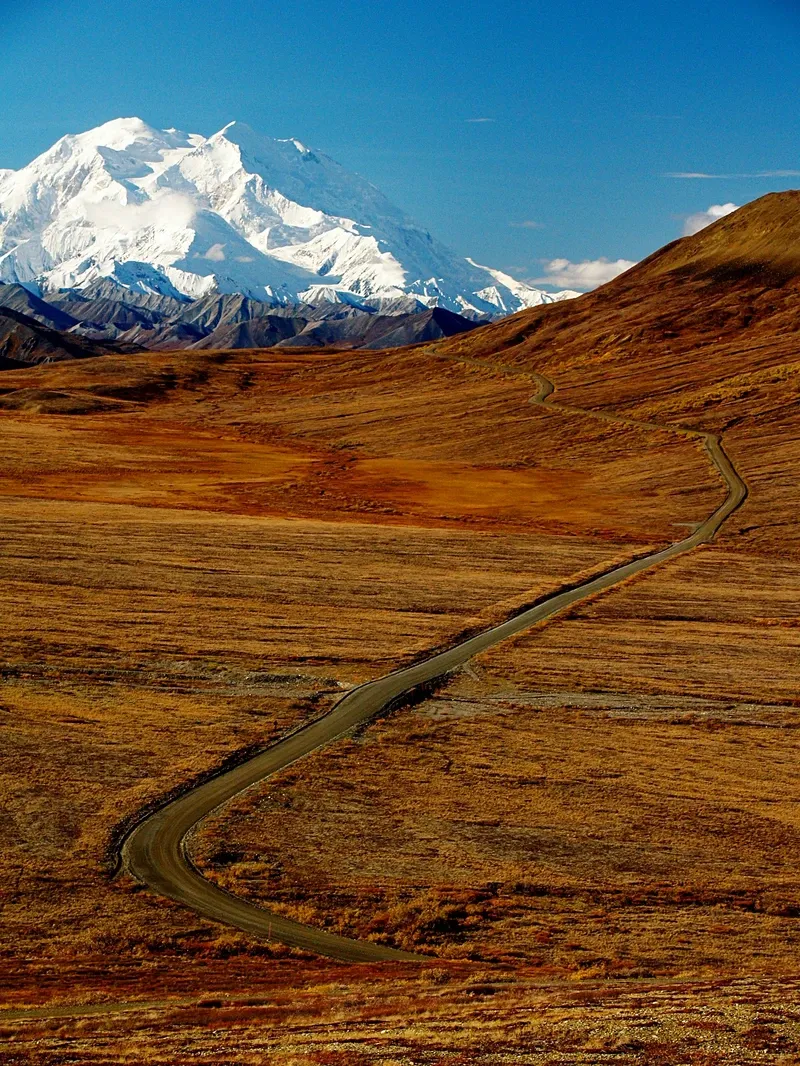
Indigenous hunters have tracked game through the Denali region for at least 11,000 years. Archaeological sites scattered across the Teklanika River valley reveal ancient camps where early inhabitants processed caribou meat and crafted microblade stone tools. The Koyukon Athabascans, who lived in the surrounding river basins, named the massive peak "Denali," translating directly to "the high one." They navigated the harsh sub-arctic winters using snowshoes and dog teams, utilizing the brief, intense summers to gather berries and hunt across the open tundra.
British explorer George Vancouver recorded the first European sighting of the mountain on May 6, 1794. He noted distant, massive snow-capped peaks while surveying the Cook Inlet from his ship. Russian explorer Lavrenty Zagoskin followed in 1843, mapping the inland river systems for the Russian-American Company. The mountain's title shifted abruptly in 1896 when gold prospector William A. Dickey published an article in the New York Sun. He dubbed the peak "Mount McKinley" to support presidential candidate William McKinley's stance on the gold standard. Congress formally recognized this name in 1917, the exact same year they established Mount McKinley National Park.
Mountaineers began targeting the peak in the early 20th century. In 1910, a group of Alaskan miners known as the Sourdough Expedition claimed to have reached the North Summit carrying only a thermos of hot chocolate and a bag of doughnuts. Hudson Stuck, Harry Karstens, Walter Harper, and Robert Tatum achieved the first verified ascent of the higher South Summit on June 7, 1913. Harper, an Alaska Native, was the first man to set foot on the top. Decades later, Bradford Washburn pioneered the West Buttress route in 1951, which remains the primary path used by modern climbers.
Unlike earlier national parks created to protect geological wonders like geysers or canyons, this park was the first established specifically to safeguard wildlife. Naturalist Charles Sheldon spent a winter in a cabin near the Toklat River in 1907, witnessing market hunters decimating the local Dall sheep populations to feed nearby mining camps. His lobbying efforts in Washington directly resulted in the park's creation. In 1976, the United Nations designated the area as an international biosphere reserve to study its intact sub-arctic ecosystems. President Jimmy Carter expanded the park boundaries in 1980, tripling its size to 6 million acres and renaming the protected area Denali National Park and Preserve.
The mountain itself retained the McKinley title until 2015. After decades of organized advocacy by Alaskan lawmakers and Native groups, President Barack Obama officially restored the traditional Koyukon Athabascan name. Today, the park faces severe infrastructure challenges driven by climate change. The Pretty Rocks landslide at Mile 43 has compromised the main road, as the thawing permafrost causes the gravel surface to drop several inches per day. The National Park Service is currently constructing a 475-foot steel suspension bridge to bypass the shifting earth, limiting all vehicle traffic to the first half of the park.
Tectonic plate collisions formed the Alaska Range approximately 60 million years ago. The continuous uplift along the active 1,200-kilometer Denali fault pushes the massive granite pluton of Denali higher by about one millimeter each year. The mountain features two distinct, heavily glaciated summits. The South Summit reaches 20,310 feet, while the North Summit tops out at 19,470 feet. Denali boasts a vertical relief of 18,000 feet from its base on the surrounding 2,000-foot plateau to its peak. This extreme elevation gain makes it the tallest mountain on land from base to peak, surpassing even Mount Everest, which sits on a high-elevation Tibetan plateau.
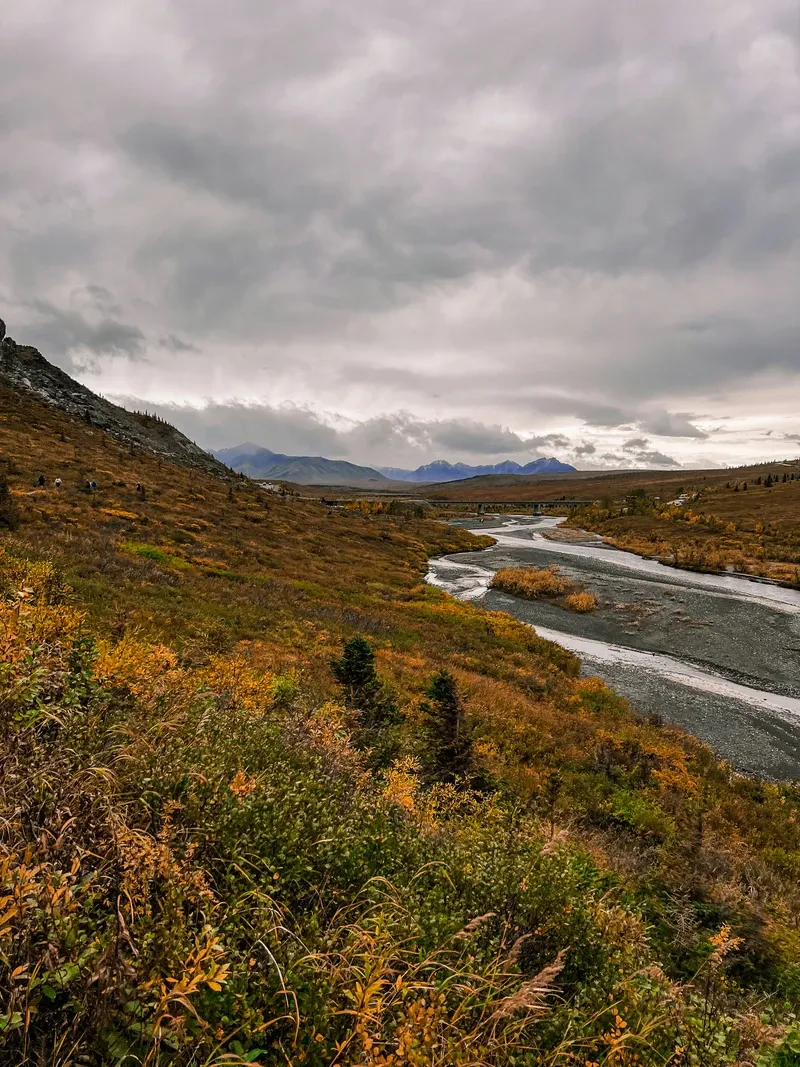
More than 40 named glaciers flow down the mountain's flanks, covering one-sixth of the park's total six-million-acre area. The Muldrow, Tokositna, Ruth, and Kahiltna glaciers act as massive conveyor belts of ice, carving deep U-shaped valleys through the granite rock. The Kahiltna Glacier stretches 44 miles, making it the longest in the Alaska Range. The ice reaches depths of 4,000 feet in the Ruth Gorge, where 5,000-foot vertical granite walls tower above the glacier surface. These ice fields feed a complex network of seasonal lakes and braided rivers that sustain the sub-arctic ecosystems below. Beneath the tundra, a layer of permanently frozen ground called permafrost shapes the landscape. This frozen soil prevents water from draining, creating the shallow ponds and boggy wetlands that breed millions of mosquitoes each summer. As global temperatures rise, this permafrost thaws, causing the ground to slump and creating drunken forests where black spruce trees lean at chaotic angles.
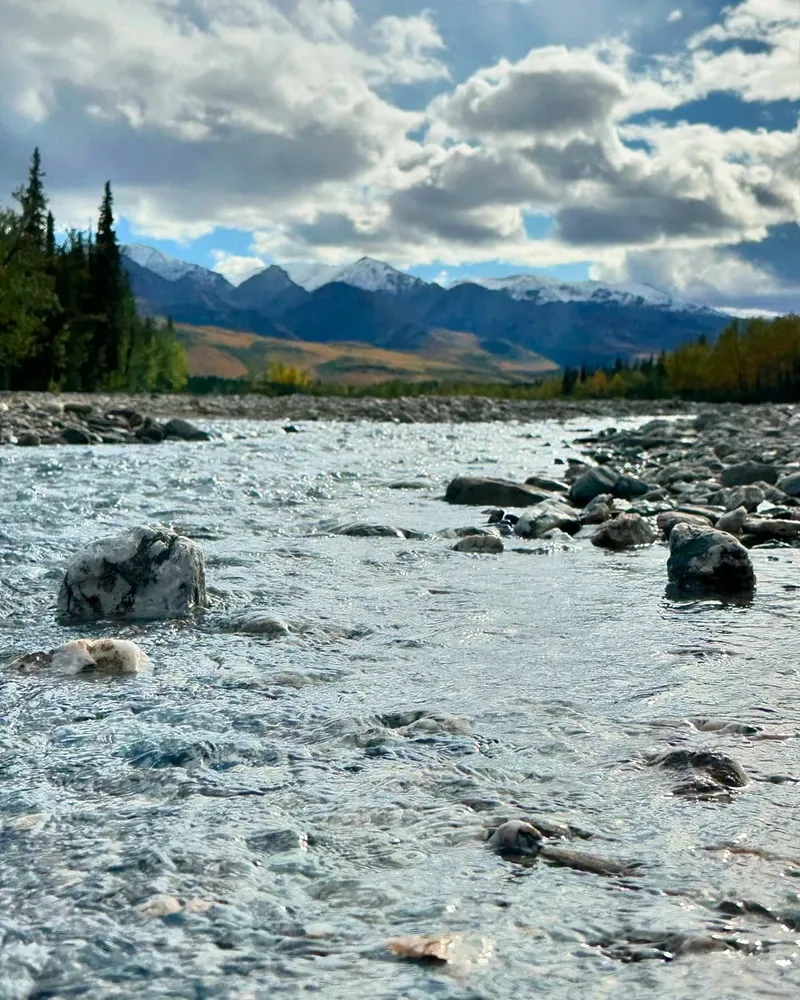
The Denali fault line also generates frequent seismic activity. Earthquakes regularly shake the park, triggering massive avalanches off the mountain's steep faces and altering the flow of the glacial rivers. Navigating these geological features requires serious preparation and physical endurance. The braided glacial rivers present immediate physical dangers to backcountry hikers. Swift, freezing currents flow through deep, shifting gravel channels that change daily based on glacial melt and rainfall. The water runs opaque with gray glacial flour, hiding submerged hazards and deep drop-offs. A slip in these 35-degree waters can quickly sweep a person downstream, leading to hypothermia or drowning. Hikers must unbuckle their backpack hip belts, wear sturdy water shoes, and cross wide, shallow sections with a partner. Check the water levels at the Backcountry Information Center before attempting any major river crossings.
The Koyukon Athabascans view Denali as far more than a geological landmark. For thousands of years, the mountain has anchored their oral traditions, acting as a spiritual compass and a physical symbol of endurance in a brutal climate. The name itself reflects a deep respect for the natural hierarchy, acknowledging the peak's absolute dominance over the weather, the river systems, and the wildlife that sustain the local communities. Traditional stories often feature the mountain as a sentient entity that demands respect from those who travel through its shadow.
In the global mountaineering community, Denali holds a distinct, formidable reputation. As a member of the "Seven Summits," it draws climbers from around the world who want to test themselves against extreme latitude and altitude. The mountain's location just 200 miles south of the Arctic Circle means the barometric pressure at the summit is significantly lower than at similar elevations near the equator. Climbers face thinner air, severe altitude sickness, and frequent minus-40-degree temperatures. The standard West Buttress route requires climbers to haul 100-pound sleds of gear across crevassed glaciers for three weeks. Rescue helicopters cannot operate near the summit during frequent whiteout storms.
The 2015 restoration of the name Denali marked a critical victory for Alaskan Native rights. It ended a century-long erasure of Indigenous geography, aligning federal maps with the language spoken by the people who have inhabited the interior valleys for millennia. The park's cultural identity is also deeply tied to the tradition of dog mushing. Denali remains the only national park in the United States that employs a working kennel of sled dogs. Since the 1920s, rangers have relied on Alaskan Huskies to patrol the backcountry during the long winter months when motorized vehicles fail in the extreme cold. These dogs haul supplies to remote cabins, break trail through deep snow, and monitor wildlife populations without the noise pollution of snowmobiles. Visitors can watch these canine rangers pull sleds during daily demonstrations at the park kennels, keeping this vital Alaskan tradition alive.
Denali has a vertical relief of 18,000 feet from base to summit. This makes it taller from base to peak than Mount Everest, which sits on a high-elevation plateau.
Denali is the only US national park with a working kennel of sled dogs. These Alaskan Huskies help rangers patrol the wilderness during the snowy winter months.
Persistent cloud cover obscures the mountain for most of the summer. Only about 30 percent of visitors actually get to see the peak during their trip.
The mountain's high latitude creates brutal weather conditions. Automated weather stations near the summit have recorded temperatures dropping below minus 75 degrees Fahrenheit.
The wood frog survives Denali's harsh winters by freezing solid. Its heart stops beating and it stops breathing until the spring thaw brings it back to life.
Over 130 species of birds migrate to Denali's seasonal wetlands to breed. Some species, like the Arctic Tern, travel from as far away as Antarctica.
A moving rock glacier at Mile 43 has displaced the main park road by dozens of feet per year. The National Park Service is currently building a 475-foot suspension bridge over the slide.
On average, persistent summer clouds hide the mountain from 70 percent of visitors. You can increase your chances by booking a flightseeing tour from Talkeetna or Anchorage. Inside the park, the Stony Hill Overlook at Mile 62 provides an unobstructed view on clear days.
Private vehicles are restricted to the first 15 miles of the Denali Park Road during the summer season. Beyond the Savage River Bridge, you must ride a park transit bus or a narrated tour bus. Visitors with severe mobility limitations can apply weeks in advance for a special road travel permit.
The National Park Service charges a $15 entrance fee per person for adults aged 16 and older, valid for seven days. Children aged 15 and under enter for free. Holders of the America the Beautiful National Parks Pass do not pay this fee.
Denali operates six campgrounds, including Riley Creek, Savage River, and Teklanika River. Riley Creek sits at Mile 0.25 and remains open year-round, offering free camping during the winter and spring. Summer visitors must reserve nightly sites well in advance through the park concessioner.
Transit buses are green, non-narrated, and designed for independent hikers who want to hop on and off along the road. Tour buses are tan, feature a trained interpretive guide, and follow a strict, structured sightseeing itinerary. Both require advance tickets picked up at the Denali Bus Depot.
Day hikers do not need a permit to explore the park's trails or walk off-trail into the wilderness. However, overnight backcountry camping requires a free permit. You must register in person at the Backcountry Information Center before setting up camp.
You can walk leashed pets on paved roads, multi-use bicycle paths, and in entrance-area campgrounds like Riley Creek. Dogs are strictly prohibited on all dirt trails, off-trail wilderness areas, and park buses. The park enforces these rules to protect both pets and local wildlife.
The Pretty Rocks landslide severely compromised the road's safety, causing the gravel surface to drop several feet per week. The National Park Service closed the route past Mile 43 to construct a massive suspension bridge over the unstable earth. All summer bus traffic currently turns around at the East Fork River.
The park sustains 37 species of mammals, including grizzly bears, moose, wolves, Dall sheep, and caribou. Transit and tour buses offer the safest vantage points for spotting these animals across the tundra. Federal law requires visitors to stay 300 yards away from bears and 25 yards from all other wildlife.
Late May through mid-September marks the official summer season, providing full access to visitor centers, shuttle buses, and active wildlife. Late August to early September brings autumn colors to the tundra and a sharp drop in mosquito populations. Winter visits require extreme cold-weather gear, as facilities close and daylight shrinks to a few hours.
Browse verified tours with free cancellation and instant confirmation.
Find Tours